
17th September 2026

‘Easy to install’ is a common marketing phrase throughout the construction industry, including for pitched roof membranes. However, as the industry moves away from such terminology – thanks in part to initiatives like the CCPI – it becomes more important to understand specific features that make products user-friendly, says Pamela Howat, Senior Technical Advisor at Proctor Group.
With twenty-two Proctor Group products achieving Code for Construction Product Information (CCPI) Assessed status in 2025, we became very familiar with the Code’s requirements and expectations.
That includes the CCPI document Words and Phrases to Avoid Using, which says ‘easy to install’ is subjective and depends on user experience.
BBA certificates typically say pitched roof underlays should be used by experienced installers, suggesting users should be well-versed in how to get the best out of products. Nevertheless, you can also appreciate the opposing argument: pitched roofing is a skilled trade, and suggesting that an underlay is ‘easy’ to install implies it can be done well even with limited experience.
Using installer feedback to guide product development
If a manufacturer can’t guarantee ease of installation in their products, they can at least take on board feedback from installers to try and address common issues.
Third party certification provides confidence that a product does what it says and can be used in a certain application. But nobody can fully appreciate a product until they have tried it and tested it.
Feedback from end users is crucial. If a product is difficult to install, even for an experienced contractor, then the manufacturer needs to understand that. Otherwise, contractors will complain to their merchants and suppliers, and move on to an alternative they prefer. The positive and negative aspects of an underlay can significantly alter how that product (and its manufacturer) is perceived in the marketplace.
Proctor Group prides itself on making products that are fit for purpose. Contractors sometimes speak to us about cheaper alternative products they’ve had a bad experience with, and we carry that feedback into our product development processes as well.
A cost-effective product is not the same as the cheapest product
Architect, NF Cachemaille-Day, designed some of the most “revolutionary” 20th century churches in the UK. Among them is St Mary’s Barton in Headington, Oxfordshire. While not the oldest church in the country, having only been built in 1958, it nevertheless possesses architectural significance.
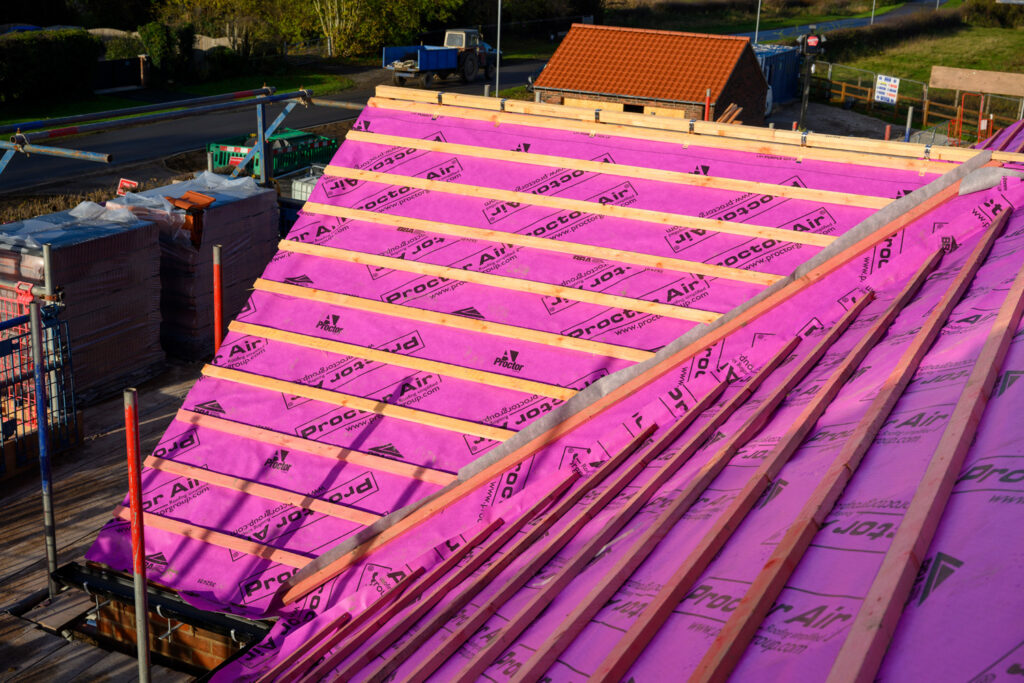
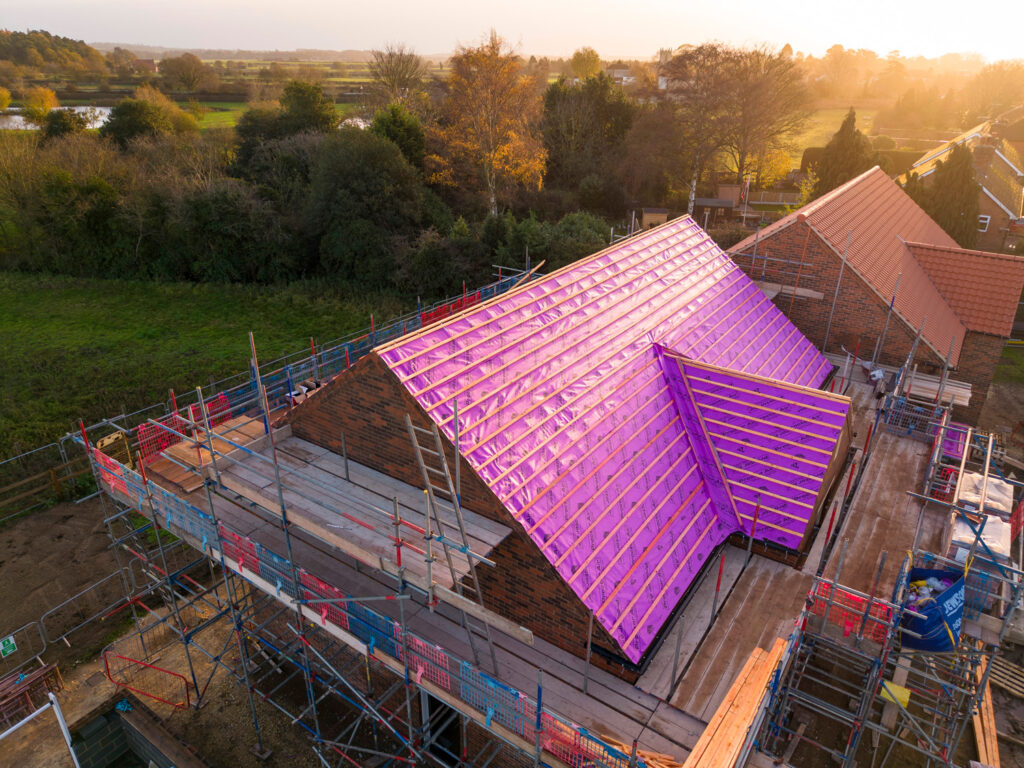
The building required essential repairs and renovation, including a new pitched roof covering and underlay. The roofing work, carried out by contractors Speakman Roofing, had to be specified and carried out respecting the architectural heritage of the building.
Speakman Roofing put forward Proctor Air® as their preferred underlay, because it was a product they were already familiar with. Director of the company, Andrew Speakman, explained: “We use Proctor Air on nearly every project. The one product can cover all eventualities so it’s cost effective – we don’t have to stock different rolls of different membranes.”
A cost-effective product is not the same as the cheapest product, and one of the big reasons for Proctor Air being cost effective is that Speakman Roofing’s team like using it, know it works and can therefore install it across the vast majority of their projects.
“From the first time we trialled Proctor Air, the feedback from our installers was that it’s good to use,” said Andrew. “It gets all the little things right that matter to the people using it.”
Practical questions about a pitched roof underlay that matter to installers include: does it tear easily? Will it cut well, or do the edges fray when you run a knife through it? Andrew described how his installers found Proctor Air to be “lightweight but strong.”
What makes Proctor Air a user-friendly pitched roof underlay?
Beyond its headline performance characteristics, there are characteristics of Proctor Air that make a big difference to installing it on site.
For example, in an assessment of the fabric’s strength, Proctor Air achieves an excellent Mullen burst strength result. This helps it to resist normal roof installation loads. In addition, an assessment of its slip resistance shows it has a high coefficient of friction, which increases safety during the installation of the covering as part of normal safe working practices.
Of course, a pitched roof underlay has to deliver its promised performance for the building as well.
Proctor Air is an air permeable, low resistance (APLR) membrane, meaning it reduces condensation risk in the roof space while avoiding the need to install vents in the roof. This is a wider benefit for installers, and is especially useful on heritage projects and existing roofs.
“The air permeability of Proctor Air makes it very versatile for us,” said Andrew Speakman. “St Mary’s Church featured a traditional pantile on a mortar-bedded creasing tile eave. Proctor Air gave us a breathable roof without sacrificing the traditional elements, and while maintaining the original appearance of the building.”
Visit https://proctorgroup.com/ for more information.