22nd October 2026

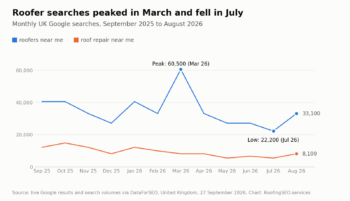
If you type “roofers near me” into a phone, you will understand how quickly a buyer decides. A map. A shortlist. A few star ratings. Then a call, often within minutes. In that window, most homeowners are not comparing technical specs. They are scanning for confidence.
Therefore, roofer SEO is what puts you in that shortlist and helps you stay there. It is also what helps roofing companies attract the jobs they actually want, instead of living on last-minute discounts and frantic follow-ups.
This helpful guide breaks down what is really happening behind “near me” searches, why local signals now matter more than ever, and how to build a repeatable system that supports high-quality enquiries regarding roofing needs. It explains how local SEO helps build a durable business for roofing specialists.
The Roofers near me search is not just about distance. It is about intent. Someone searching for that phrase usually wants action. They may have spotted broken tiles after a windy night. They may be dealing with storm damage. They might be weighing a re-roof after years of patching. They are often urgently looking for professional roofers who could help them with repairs or home improvements.
The problem is that the buyer sees a crowded list. Every roofing company claims to be reliable. Every site says “free quote.” Every profile looks acceptable at a glance.
That is where Roofing SEO changes the odds. It helps your business show up at the right time, with the right proof, so you do not have to win the job on price. In a competitive market, that difference protects margins and stabilises your calendar.
It also expands your reach without pretending you cover everything. When your visibility lines up with your true service areas and surrounding areas, you attract enquiries you can serve well.
A decade ago, many jobs started with a neighbour’s recommendation or a sign. Today, buyers still trust word-of-mouth, but they verify it online before they call.
A typical journey often looks like this:
That journey is short, but it is not shallow. People are making a high-stakes choice quickly, so small details carry weight. If your listing has outdated information, if your site looks hard to use, or if your message feels generic, you get filtered out.
Roofing SEO is built for this reality. It does not assume people will browse for fun. It assumes they want a solution now, and it helps your business look ready.
Local SEO services is how you win the “near me” moment in cost-effective way. It is the set of signals that tells search engines and real people that you are relevant in this location, for this problem, right now.
First, your local presence. That includes your map profile, photos, consistency across listings, and the strength of your review profile.
Second, your website. Not a brochure. A working tool that makes it easy to choose you, book an inspection, and understand the next step – a professionally built, SEO optimized website.
When these pieces work together, rankings improve naturally, and your enquiries get cleaner. You spend less time sorting weak leads leading to smaller conversion rates and more time quoting jobs that fit your crew and your pricing.
Local SEO also helps you avoid a trap many roofing contractors fall into: overextending. It is tempting to claim a huge radius. The better play is to own the areas you can serve at a high standard, then expand with intention.
Roofing SEO is search engine optimisation tailored to how roofers are hired. It combines local search signals, site structure, content clarity, and trust signals that influence clicks and calls.
It usually includes:
This is not a theory. It is how you turn online visibility into booked work. It also supports the full range of roofing services you offer, from emergency patching to planned new roof installations.
Keywords matter, but roofers do not win by repeating phrases. They win by building a connected experience that feels trustworthy from the first glance to the first call.
A holistic approach connects the full journey:
This is also where specificity wins. The “type of roof” changes what a buyer expects. A flat roof owner wants to hear about drainage, detailing, and membrane choices.
Someone with pitched roofs wants to understand ventilation, tile condition, and ridge work. A customer with a slate roof expects a more specialist conversation. If your message speaks to none of those realities, you sound like every other listing.
Your content can quietly solve this. Mention the roofing materials you work with. Explain how you approach roof tiles matching. Describe how you handle leadwork around chimneys. Those are not “marketing extras.” They are trust builders.
General SEO advice often assumes long consideration cycles. Roofing does not behave that way.
Roofing decisions are local, urgent, and trust-heavy. Buyers do not want clever copy. They want confidence that you can solve the problem without creating a bigger one.
Roofers also operate under local constraints that generic strategies ignore:
A good roofer SEO plan respects these details. It is built for real roofing problems, not generic “rank and hope” tactics.
You can chase shiny tactics, but the businesses that rank consistently tend to do the fundamentals well and keep doing them. These four pillars hold everything up.
For many local roofers, the map profile is the real homepage. It is where people decide whether to call, and it influences how you show up in local search.
Optimisation is not just filling in blanks. It is positioning.
Here is what strong profiles typically include:
Reviews matter here, but context matters more than perfection. Buyers trust detailed reviews that mention what was done: roof repairs after storm damage, a re-roof on an older property, chimney repairs that stopped water ingress. Those specifics influence clicks.
If you operate in a market that values certification, mention it in the right place. Even a short line about NFRC expectations or standards can be a helpful credibility cue for certain buyers. Use it sparingly, but do not hide it.
On-page SEO is where your website turns into a sales assistant. It should answer the questions people ask before they trust you enough to book.
Start with structure. Most roofing companies need clear pages for core services. This is where service pages do heavy lifting. A good page matches one intent, then guides the visitor to the next step without friction.
A practical service-page setup often includes:
Then add supporting sections that reflect real buying behaviour. People often ask about roof inspections, warranties, and what is included in a quote. Give them that information early. It reduces hesitation.
Make the site easy to act on. If someone is ready to book, they should not hunt for it. Put the free quote option where it is obvious. Keep the form short. Make sure the call button works smoothly on mobile.
Also, acknowledge bundled work. Many homeowners make one decision for multiple items. If you handle guttering cleaning, gutter cleaning, soffits, and fascia repairs, list them clearly as part of your roofing solutions. It signals completeness and saves the buyer from calling three different tradespeople.
One more point: do not hide quality cues. A short section on public liability insurance, workmanship, and a high standard approach can be the difference between a call and a bounce.
Off-page SEO is how your credibility shows up beyond your website. Search engines look for proof that other sources mention you, and buyers look for proof that real people trust you.
This is where local reputation and community presence become practical assets.
Focus on a small set of sources that make sense:
The goal is not to collect random links. It is to build trust and consistency. If your details are accurate across listings, your business appears more legitimate. If the web shows mixed information, buyers hesitate.
Off-page also includes testimonials and reviews that live on platforms you do not control. Do not ignore them. Respond professionally. Thank positive reviewers.
Address concerns calmly. That behaviour does not just influence trust; it supports local rankings because it influences engagement and click decisions.
Technical SEO is invisible until it hurts you. Then it becomes the reason your site is not getting calls.
At minimum, you want a foundation that search engines can crawl and users can navigate without friction:
Technical SEO also supports clarity. If your pages load slowly, users bounce. If your navigation is confusing, they get lost. If your images are huge, the site drags, especially on mobile networks.
This is also where you can signal expertise without stuffing keywords. A short explanation of your approach to EPDM on low-slope jobs can help the right customer self-select. Mention it once, in context, and move on.
Once the fundamentals are strong, advanced strategies amplify results. These strategies can significantly boost traffic and business.
Content marketing works best when it answers the questions people are already asking, in plain language, without fluff.
The highest-converting content usually revolves around risk, cost, and decision clarity:
Content should also reflect the variety of roofs you work on. Mention a tiled roof in the right context. Explain how you handle roof tiles matching and sourcing. Talk briefly about slate roof repairs and why that work requires a careful hand. These details separate professional roofing brands from generic listings.
Do not overproduce content. One strong, useful page is better than ten thin ones. If you want a simple structure, build one “hub” page for each major service, then add short FAQs inside the page to answer common questions without bloating the site.
Roofing is visual, and video builds trust quickly. People may not understand technical language, but they understand what they see.
A few video formats that tend to work well:
Video also helps you show professionalism. Viewers see your team’s safety habits, how you speak, and whether your approach feels calm and organised. That matters more than fancy edits.
If you serve commercial properties, simple on-site videos can also reassure decision-makers. They want to see the process, communication, and how you document work.
PPC can complement SEO when it is used carefully. It is most useful when you need demand quickly or when you are entering a new pocket of your market.
Hyper-local paid targeting works best when you keep it tight:
Paid traffic should not replace organic visibility. It should support it. Over time, SEO reduces reliance on paid spend, but PPC can fill gaps in seasonal demand or support specific campaigns, such as a push for roof cleaning in spring.
If you do not measure outcomes, you cannot separate real progress from noise. Rankings matter, but calls and booked work matter more.
Keep KPIs simple and tied to business reality. Track what indicates actual growth.
Strong KPIs for roofers usually include:
Also track lead quality, not just volume. Ten weak enquiries are not better than three high-intent calls. High-quality leads tend to come from pages that match intent and from listings that look credible and active.
You do not need a complicated tech stack. You need clear answers.
Most businesses can cover the basics with:
If you see strong visibility but low conversion, it often points to messaging or page structure. If you see strong conversion but low visibility, it points to local signals and authority. The fix depends on the pattern, not on guesswork.
Even strong roofing work can be held back by avoidable mistakes online. These are the ones that show up repeatedly.
It is tempting to force keywords into every paragraph. It usually backfires. Pages become unreadable, and trust drops.
Instead, write naturally and focus on clarity. Search engines are good at understanding context when the content is genuinely useful. Keep your language human. Earn rankings through relevance and proof, not shortcuts.
Link building is often how google understands the importance of the page and how to get backlinks for roofing websites is something that even most roofing SEO agencies are unable to do properly.
“Near me” searches happen on mobile. If your site is hard to use on a phone, you lose the lead before you even know it existed.
Make the experience smooth:
That is not design advice. It is conversion protection.
Online reputation is not a side task. It influences calls directly.
Customer reviews and testimonials create a social proof layer that many buyers trust more than your own copy. Request reviews consistently. Respond consistently. If you do that, your profile looks alive, and your brand looks accountable.
Also, do not ignore negative feedback. One thoughtful response can show maturity and professionalism. Silence often looks worse than the complaint.
Roofing SEO is not a one-time clean-up. It is an ongoing process, and the businesses that treat it that way tend to own their markets.
Search behaviour shifts. Competitors improve. Platforms change how results are displayed. Your content and listings need periodic updates to stay sharp.
The work does not need to be huge. It just needs to be consistent:
That steady rhythm is what builds momentum.
Some roofing companies prefer DIY, especially early on. That can work if you have time, discipline, and the ability to stay consistent.
The challenge is that roofing work is demanding, and marketing tasks get pushed to “later.” Later becomes months. Then competitors pass you.
If you partner with experts, demand clarity. Ask what will be done, when it will be done, and how success will be measured. A good partner understands roofing specifics, including roof tiles, leadwork, and the difference between flat roofing and pitched roofs. They also respect your service boundaries because relevance is built on truth.
If you want to win the “near me” search, the goal is not hype. It is trust at speed.
Make your local presence strong and consistent. Make your site easy to use. Build pages that match real intent, from roof repairs to new roof installations. Show proof of professionalism, from public liability insurance to clear warranties. Keep your message aligned across your surrounding areas.
Then stay consistent. That is how roofers rank, attract the right enquiries, and build a local brand that does not depend on luck.